




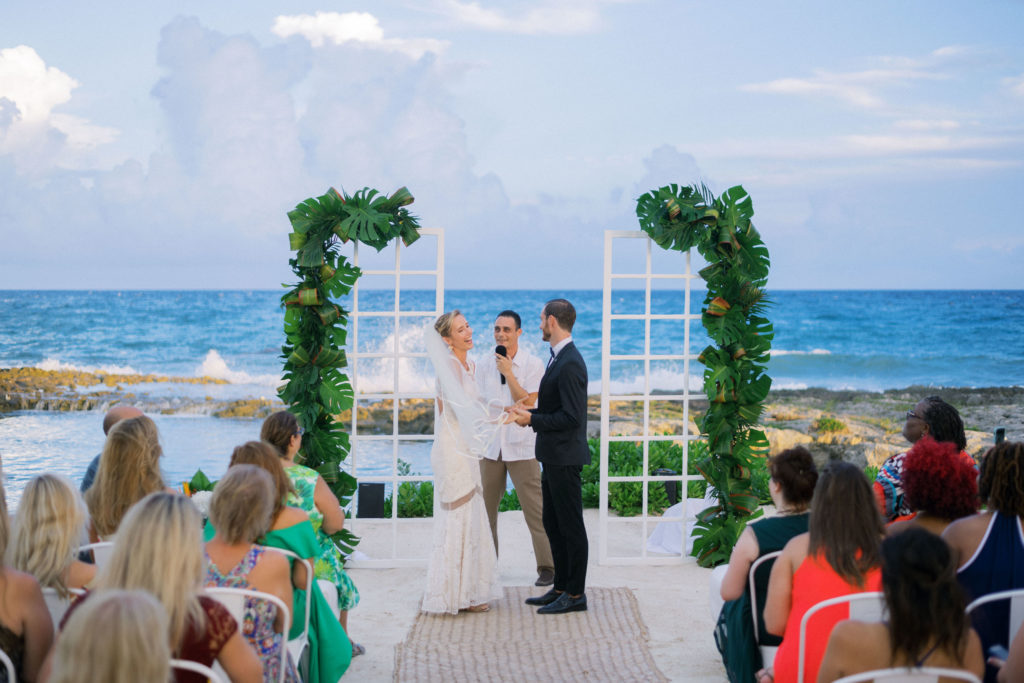
You love the idea of getting married at an all-inclusive resort. Then someone asks the question you’ve probably been trying not to think about:
“What will this cost our guests?”
It’s a fair concern. Your guests may need to pay for airfare, accommodations and time away from work to attend. For some people, the trip will fit comfortably into their travel budget. For others, it won’t.
No destination wedding is affordable for every person on an invitation list.
The goal isn’t to find a resort that everyone can afford. That resort doesn’t exist. The goal is to understand what the trip is likely to cost, consider the people you most want there and make thoughtful choices before signing a contract.

Start With the Guests You Most Want There
Before comparing destinations or resort packages, talk about who needs to be at your wedding for it to feel right.
Your priority list might include parents, siblings, grandparents and members of the wedding party. Once you know who those people are, consider where they live, how many are traveling as a family and what limitations could affect their ability to attend.
You don’t need to ask everyone for a copy of their bank statement. A simple conversation with the people closest to you can prevent a much more difficult one later.
Ask questions such as:
- Would international travel be realistic for them?
- Do they already have passports?
- Will they need to travel with children?
- How much time can they reasonably take off work?
- Are there mobility or health concerns to consider?
- Would they need help covering part of the trip?
If someone’s attendance is essential to you, talk with that person before choosing the resort and date.
What Will Guests Actually Need to Pay For?
The resort rate is only one part of the cost.
Depending on the destination and guest’s circumstances, attending may involve:
- Airfare
- Resort accommodations
- Airport transportation
- Passport expenses
- Baggage and seat-selection fees
- Travel insurance
- Wedding attire
- Airport parking
- Childcare or pet care
- Time away from work
- Optional excursions or wedding-weekend activities
Guests traveling alone may face a higher per-person room cost than guests sharing a room. Families also need rooms that allow the right number and ages of children, which can limit their options.
That’s why I don’t use one universal average when helping a couple determine whether a trip is reasonable. We look at current resort rates for the proposed dates and consider where the couple’s guests will be traveling from.
All-Inclusive Pricing Makes Some Costs More Predictable
An all-inclusive resort can make the budget easier to understand because accommodations, meals and most drinks are bundled into the room price.
Once guests arrive, they usually don’t need to budget separately for every breakfast, poolside lunch or round of drinks. Your ceremony and reception also take place at the resort, so guests aren’t paying for transportation between several wedding venues.
But an all-inclusive stay isn’t automatically inexpensive.
The resort category, travel season, room type and number of people sharing the room all affect the price. A higher room rate may still provide better overall value if it includes the experience your guests want, but that doesn’t mean every guest can afford it.
If you’re comparing resort levels, my guide to 3-star versus 5-star all-inclusive resorts explains what those price differences may look like once guests arrive.
Choose the Destination Based on Actual Flight Access
A destination can look reasonable until airfare enters the conversation.
Rather than assuming one part of Mexico or the Caribbean will be affordable, check flight access from the cities where most of your guests live. Consider the number of nonstop flights available, typical schedules and how long the transfer from the airport to the resort takes.
A lower resort rate doesn’t help much if guests need two connections, an overnight layover and an expensive transfer to reach it.
This is also where the wedding date matters. Holiday weekends, school breaks and high-demand travel periods can push both airfare and resort rates higher. Dates that look convenient on a calendar may be some of the most expensive times to travel.
Read how to choose your destination wedding date before committing to a weekend.
Give Guests More Than One Room Option
You don’t need to select the least expensive resort available. You do need to understand what your choice asks of your guests.
One way to make the trip more manageable is to offer several room categories within the resort. Some guests may want the lowest-priced room that accommodates them, while others will happily pay more for a better view or upgraded amenities.
The important thing is making sure the lower-priced option is one you can stand behind.
I won’t recommend a resort that provides a poor experience simply because the initial rate looks attractive. Saving money isn’t helpful if your guests spend the trip frustrated by the room, food or service.
Room categories also need to work for the group. A couple, a solo traveler and a family of five may all require different options.
Understand the Room Block Before You Sign
A contracted destination wedding room block can reserve inventory for your guests and establish the booking process for the group.
It may also offer group benefits based on the number of rooms or room nights booked. Those benefits vary by resort and contract, so they shouldn’t be treated as guaranteed savings.
The contract will include deadlines, deposits and rules for releasing unused inventory. Holding too many rooms can create unnecessary financial exposure for the couple. Holding too few can leave guests without the room categories or dates they need.
This is why your realistic guest estimate matters. The room block should reflect how people are likely to travel, not the total number of invitations you plan to send.
Give Guests Time to Budget
A destination wedding requires more notice than a local wedding.
Your guests need time to request vacation days, check passports, compare flights and set aside money. Parents may also need to coordinate school schedules or childcare.
Your save-the-date or travel announcement should give guests the information they need to make a real decision:
- Destination and resort
- Travel dates
- Minimum-stay requirements
- Available room categories
- Deposit and payment deadlines
- Cancellation terms
- What the resort price includes
- A clear explanation of which activities are optional
Avoid announcing the destination without the travel costs. “We’re getting married in Mexico!” is exciting, but it doesn’t help someone determine whether they can attend.
Keep the Optional Expenses Under Control
The wedding trip is already a financial commitment. Be careful about adding several paid events around it.
A private catamaran trip may sound fun, but guests shouldn’t feel obligated to spend more money to participate in every part of the weekend. If you plan an activity guests must pay for, make it clear that attendance is optional.
You can also reduce pressure by telling guests that their presence is the gift. They may still choose to give you something, but they shouldn’t feel expected to pay for international travel and then spend beyond their means on a wedding gift.
If your budget allows, you might choose to cover a welcome event, group transportation or another shared expense. You can also help a priority guest privately. None of that is required, and you don’t have to subsidize the entire group.
For more ideas, read 8 ways to save money on your destination wedding.
Give People Permission to Decline
This is the hardest part for some couples.
A guest may love you and still be unable to attend. The trip may conflict with work, family responsibilities, health concerns or another financial priority. That doesn’t make the relationship less important.
Make it easy for people to say no without defending their finances.
Destination weddings tend to reveal the difference between inviting someone and expecting them to attend. You can invite everyone you want to include, but an invitation shouldn’t come with a guilt trip.
If there are people whose absence would change how you feel about the wedding, speak with them before you commit. Don’t wait until after the room block is signed to learn that the trip won’t work for them.
How KP Travel Group Evaluates Guest Costs
Resort websites rarely make it easy to see the complete financial picture. The least expensive room may not accommodate the families in your group. The advertised package may apply only to a different travel period, and an attractive resort rate may be paired with difficult flights.
Before recommending a destination wedding resort, I look at the couple’s priorities alongside the guest experience.
That includes:
- Current resort pricing for the proposed dates
- Room categories and occupancy rules
- Flight access from the group’s main departure cities
- Airport-transfer time
- Minimum-stay requirements
- Room-block deadlines and financial terms
- Wedding-package costs based on the expected guest count
- The quality of the resort experience guests will receive for the price
I’ve personally visited more than 235 resorts throughout Mexico and the Caribbean. That experience helps me identify where paying more delivers something guests will notice and where a resort simply isn’t worth the rate.
KP Travel Group’s destination wedding planning services start at $1,250 and are designed for groups needing at least 10 rooms. You can see a broader breakdown of couple expenses in my guide to how much a destination wedding costs.
So, Is a Destination Wedding Too Expensive for Your Guests?
It may be too expensive for some of them. That’s the honest answer.
You can’t control every guest’s budget, but you can choose a destination with reasonable flight access, avoid needlessly expensive dates and give people enough time to plan. You can offer useful room options, limit paid extras and make sure nobody feels pressured to attend.
Most important, price the complete trip before falling in love with a resort.
If you’re trying to balance the wedding you want with what you’re asking of your guests, schedule a Destination Wedding Planning Strategy Call. We’ll look at your guest list, travel dates and priorities before narrowing down the resort options.
Frequently Asked Questions
How much should guests expect to pay to attend a destination wedding?
There isn’t one reliable average. The total depends on the destination, travel dates, departure city, length of stay, room occupancy and resort category. Guests should consider airfare, accommodations, airport transfers and travel insurance, along with expenses such as baggage, passports, childcare and time away from work.
Are couples expected to pay for their guests’ travel?
Guests generally pay for their own airfare and accommodations. Couples may choose to help certain guests privately or cover shared expenses, but they aren’t expected to fund the entire group’s travel.
How can we make a destination wedding more affordable for guests?
Choose dates outside the most expensive travel periods, consider flight access from guests’ home cities and provide more than one acceptable room category. Give guests plenty of notice, limit optional paid events and explain all major costs before asking them to commit.
How far in advance should guests receive the travel details?
Couples should share the confirmed resort, dates, room options and booking instructions as soon as the room block is ready. Destination-wedding guests need time to budget, request vacation days, check passports and make arrangements at home.
Is it rude for a guest to decline because of the cost?
No. Attending a destination wedding can require a substantial financial and time commitment. Guests should be able to decline without being made to feel guilty or pressured to explain their finances.
Should guests still give a wedding gift after paying for travel?
A gift should never be treated as an obligation. Couples can reduce financial pressure by making it clear that traveling to attend the wedding is more than enough.


add a comment