



You’re engaged, and suddenly everyone wants to know where and when you’re getting married.
Meanwhile, you’re pricing local venues, comparing caterers and wondering how one evening became such a large financial and logistical project.
A destination wedding at an all-inclusive resort offers a different way to celebrate. Instead of gathering everyone for a few hours, you can spend several days together in Mexico or the Caribbean.
That sounds wonderful, but a destination wedding isn’t automatically easier or less expensive. It also asks your guests to use vacation time and pay for travel.
So, should you have one?
Here are seven genuine benefits, followed by the trade-offs you should understand before committing.
1. You Get More Time With Your Guests
This is one of the strongest reasons to have a destination wedding.
A traditional wedding reception lasts several hours, and much of that time is divided between dinner, speeches, photos and dancing. Couples often reach the end of the night feeling as if they barely spoke to half the people there.
A destination wedding gives you more opportunities to spend time together.
You might see guests at the pool, have dinner with a few friends or catch up over breakfast the next morning. Those unplanned moments can be just as meaningful as the wedding events.
You don’t need to organize every hour. Your guests are on vacation, and they should have time to enjoy it their way. The benefit comes from being in the same place for several days, not from turning the trip into a mandatory group itinerary.
2. Your Closest People Can Get to Know Each Other
Many couples have friends and family spread across different cities or states. The wedding may be the first time some of those people meet.
A destination wedding gives everyone more time together than a brief cocktail hour.
Your college friends might end up talking with your partner’s siblings by the pool. Family members who have only heard about each other can finally share a meal. Guests can form connections before the wedding day instead of being introduced five minutes before the ceremony.
Of course, not everyone will spend the week socializing. Some guests will want time alone, and that’s fine. The trip creates opportunities for connection without requiring every person to become part of one large group.
3. The Guest List May Become More Focused
Destination weddings often have fewer guests than local weddings because travel requires more time, money and planning.
A smaller group can change the feel of the celebration. You may have more time with each guest, greater flexibility in venue choices and more room in the budget for the parts of the wedding you care about.
But don’t use travel costs as a sneaky guest-list strategy.
If you invite someone, you need to be prepared for that person to attend. You should also be gracious if they decline. An invitation should never come with an expectation that someone will spend beyond their means to prove they care about you.
Before choosing the destination, identify the people whose attendance matters most. Talk with them about the general location, travel dates and likely expenses before signing a contract.
My guide to what a destination wedding may cost your guests will help you evaluate the trip from their perspective.
4. Resort Packages Give You a Planning Framework
All-inclusive resorts usually offer wedding packages that bring several core elements together.
Depending on the resort and package, that may include:
- A ceremony location
- Basic ceremony setup
- A resort wedding coordinator
- A cocktail hour or private reception
- Food and bar service for a specified number of guests
- A wedding cake
- Personal flowers
- Sound equipment
- Selected decor
That gives you a starting point instead of assembling every part of the wedding from separate vendors.
But the package is not the final price.
Packages often include a limited guest count. You may pay more for additional guests, private venues, upgraded decor, entertainment, photography, lighting and outside vendors. Site fees or private-event minimums may also apply.
Review the package using your realistic guest count and actual priorities. A package with a low starting price can become expensive once you add everything you want.
For a closer look at current expenses, read how much a destination wedding costs.
5. The Setting Can Reduce How Much Decor You Need
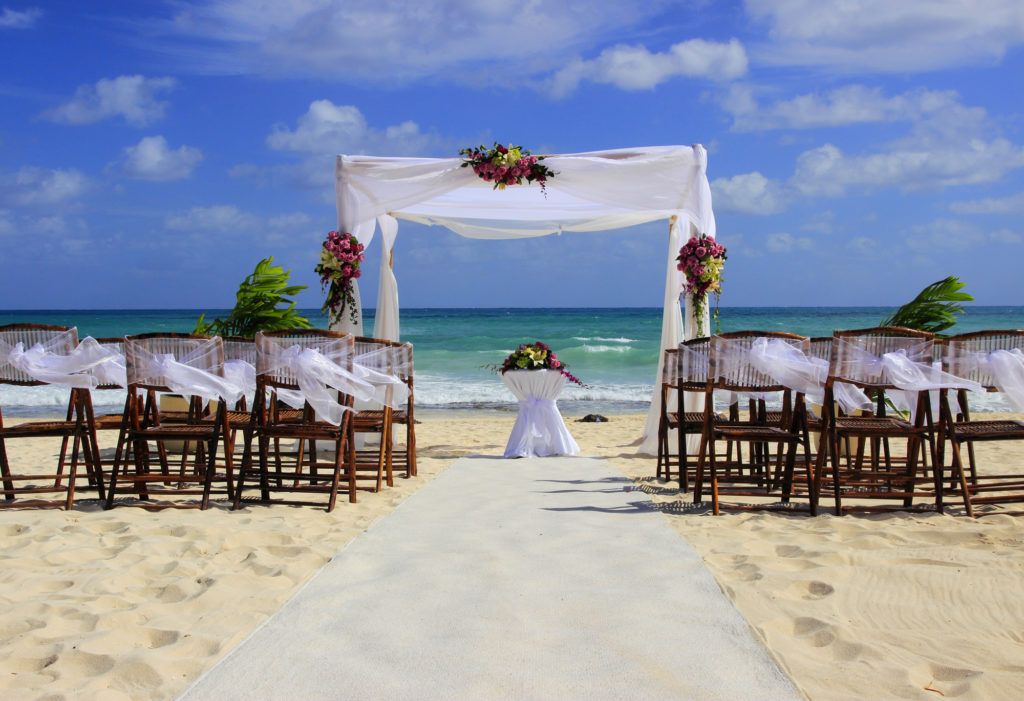
An ocean view, tropical garden or rooftop overlooking the coast gives you a strong setting before you add a single centerpiece.
Couples who prefer a simpler design may be able to spend less on flowers and decor than they would in a plain ballroom at home. You may decide the view does most of the work and concentrate the decor budget on a few areas that will have the greatest effect.
The location itself is not always free.
Resorts may charge venue fees, setup costs and minimums for private events. Outdoor receptions often need additional lighting, and every couple should have a weather backup that they would be comfortable using.
The benefit is having a setting that already feels distinctive. It does not mean you can ignore production costs or the rain plan.
6. Your Wedding Can Become a Multiday Experience
A destination wedding gives you options beyond the ceremony and reception.
You might host a welcome event, plan a group excursion or meet everyone for a casual final breakfast. Guests may also spend time together independently at the pool, beach or resort restaurants.
These experiences can make the wedding feel more connected without requiring a complicated schedule.
Choose the hosted events that matter most and leave the rest of the trip open. Guests are already paying to travel, so be careful about adding several activities that require additional payment.
If you plan an optional excursion, make that clear. Nobody should feel as if they’re missing an essential part of the wedding because they decided not to pay for a catamaran trip.
7. The Format May Fit How You Want to Celebrate
Some couples don’t feel connected to the idea of a large ballroom wedding close to home.
They would rather travel, spend several days with a smaller group and build the celebration around shared experiences. If that sounds like the two of you, a destination wedding may fit your priorities better.
The setting can also make sense when families are already spread across the country. If many guests will need to fly regardless of where the wedding takes place, choosing Mexico or the Caribbean may not feel as unusual as it would for a guest list concentrated in one hometown.
The reason should be more meaningful than wanting to be different.
Choose a destination wedding because the format reflects how you want to spend time with your guests and how you want the week to feel. That foundation will matter once contracts, budgets and family opinions enter the conversation.
Is a Destination Wedding Less Expensive?
Sometimes. But not automatically.
A smaller guest count and resort package can reduce certain expenses. Couples may spend less than they would on a large wedding in an expensive U.S. city.
Other couples spend more because they choose multiple private events, extensive decor, upgraded entertainment and a higher guest count.
The destination-wedding budget may include:
- Wedding package and venue fees
- Charges for guests beyond the package allowance
- Decor and flowers
- DJ or live band
- Dance floor and lighting
- Photography and videography
- Outside-vendor fees
- Welcome event
- Couple’s travel and accommodations
- Planning services
- Group activities
- Tips and other onsite expenses
Don’t compare a basic resort package with a complete local wedding budget. Price the full version of each event you would realistically host.
A destination wedding can offer strong value. That is different from guaranteeing that it will cost less.
Reasons a Destination Wedding May Not Be Right for You
The benefits are real, but so are the trade-offs.
Some important guests may not attend
Travel costs, health concerns, childcare, work schedules or passport issues may prevent people from coming.
If your wedding would not feel right without a specific person, speak with that person before choosing the resort and date.
Guests take on a significant expense
Guests generally pay for their airfare and resort stay. They may also need to pay for passports, airport parking, childcare, pet care and time away from work.
You are not expected to pay for everyone, but you should understand what you’re asking of them.
You will plan many details from a distance
You may select the venue, menu and decor without seeing them in person. A site visit can help, but it adds another trip to the budget.
Couples who need to inspect every detail personally may find this frustrating.
Resort rules can limit your choices
The resort may control which venues, vendors and decor options you can use. Outside vendors can carry additional fees, and some changes may not be allowed.
You need to be comfortable working within the resort’s system.
Room blocks create contractual responsibility
A destination wedding room block can hold rooms for your guests and provide group benefits. It also comes with deadlines, deposits and cancellation terms.
Holding too much inventory can create financial exposure. Holding too little may leave guests without the rooms or dates they need.
A resort coordinator does not handle the group’s travel
The resort wedding coordinator manages the wedding services provided by the property. That person does not generally manage every guest’s room reservation, airport transportation, payment questions or travel documents.
That is where a destination-wedding travel advisor comes in.
Who Handles What During Destination Wedding Planning?
A destination wedding often involves several different professionals.
The destination wedding travel advisor
At KP Travel Group, I help with:
- Destination and resort selection
- Wedding-package and venue research
- Wedding-date booking assistance
- Room-block negotiation and management
- Guest reservations
- Wedding website and travel information
- Airport transfers
- Group excursions
- Planning resources and monthly checklists
- Pre-travel emails and travel documents
- Guest support before and during travel
The resort wedding coordinator
The resort coordinator typically manages the wedding services contracted through the property. That may include the ceremony, reception, menu, decor selections and approved onsite vendors.
An independent wedding planner
An outside planner may provide additional event design, vendor coordination and wedding-day oversight. Whether you need one depends on the resort, wedding complexity and level of support you want.
A resort can be excellent for vacations and still have a wedding department that isn’t right for your group. Read why choosing a destination wedding resort is different from choosing a vacation resort before committing.
How to Decide Whether a Destination Wedding Is Right for You
A destination wedding may fit if:
- You prefer a multiday celebration with a smaller group.
- Your priority guests are willing and able to travel.
- You are comfortable planning from a distance.
- You understand the likely guest costs.
- You can work within resort rules and deadlines.
- Travel is already an important part of your lives.
- You value shared time over one large evening event.
It may not fit if most of your priority guests cannot travel, you want full control over every vendor or you expect a resort package to make the wedding almost effortless.
You don’t need to choose the resort before asking for help. In fact, that decision should come later.
Start with your guest list, budget, travel dates and the experience you want. My guide to starting the destination wedding planning process will show you what to work through first.
Ready to Talk Through the Decision?
KP Travel Group plans no more than 20 destination weddings each year so I can stay involved and provide the level of support each couple and group needs.
My destination wedding planning services start at $1,250 and are designed for groups needing at least 10 rooms.
If you’re trying to decide whether a destination wedding fits your guests, budget and priorities, schedule a Destination Wedding Planning Strategy Call. We’ll talk through the practical side before you commit to a resort or wedding date.
Bonus Resource
Think a destination wedding may be right for you, but have no idea how to choose the location, resort and venue?
Download my free destination wedding guide. It includes the questions you should consider before narrowing down your options.
Frequently Asked Questions
What are the main benefits of a destination wedding?
A destination wedding gives couples more time with their guests, a multiday celebration and a naturally appealing setting. Resort packages can also provide a useful planning framework, and the guest list may be smaller than it would be for a local wedding.
Is a destination wedding less expensive than a traditional wedding?
It can be, but it isn’t guaranteed. Guest count, resort, wedding package, private events, decor and entertainment all affect the total. Couples should compare complete budgets rather than comparing a basic resort package with a fully planned local wedding.
Do destination weddings usually have fewer guests?
They often do because attendance requires travel, time away from work and a larger financial commitment. Couples should still plan as if invited guests may attend and should make it easy for anyone to decline without guilt.
Are guests expected to pay for their own travel?
Guests generally pay for their airfare and resort accommodations. Couples may choose to help certain guests privately or cover shared expenses, but they are not normally expected to pay for the entire group’s travel.
How long does a destination wedding celebration last?
The wedding ceremony and reception may take place on one day, but guests often stay for several nights. Couples may also host a welcome event or final breakfast while leaving much of the trip open for guests to enjoy independently.
What does an all-inclusive resort wedding package include?
Inclusions vary by resort and package. A package may include the ceremony location, basic setup, wedding coordinator, food and bar service for a specified number of guests, cake, flowers or sound equipment. Additional guests, private venues and upgrades may cost more.
Who helps plan a destination wedding at a resort?
A destination-wedding travel advisor handles resort selection, room blocks and guest travel. The resort wedding coordinator manages services provided by the resort. Some couples also hire an independent planner for event design and wedding-day oversight.
How do we know whether a destination wedding is right for us?
Consider your priority guests, complete budget, preferred wedding format and comfort with planning from a distance. A destination wedding is a stronger fit when travel matters to you and your closest guests can reasonably attend.


[…] out these 7 reasons to have a destination wedding! After reading this list, who wouldn’t […]
[…] Check out a few reasons why by reading 7 Reasons to Have a Destination Wedding. […]